
What the canvas is for
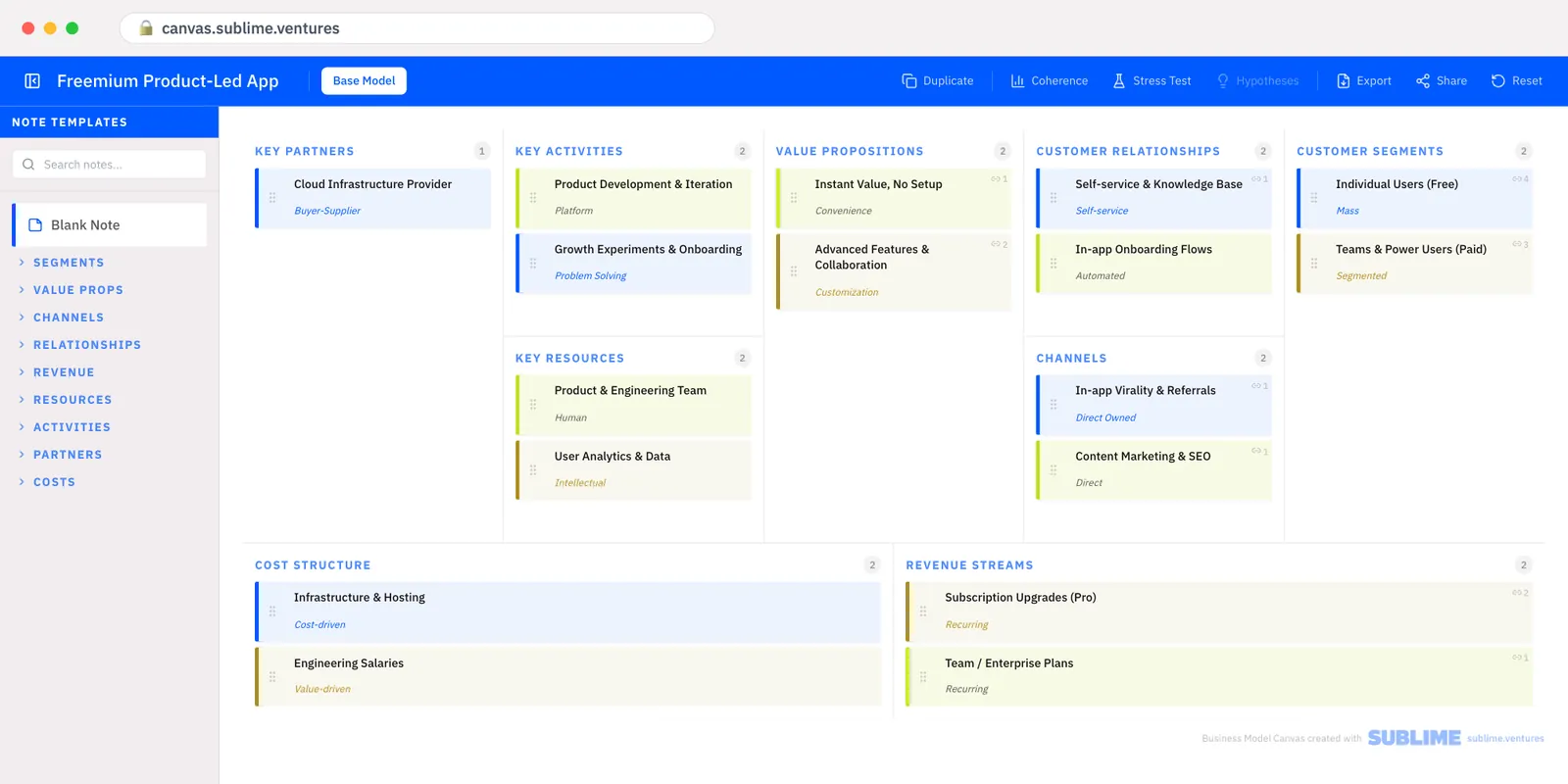
The Business Model Canvas describes how a venture creates, delivers and captures value in nine blocks: customer segments, value proposition, channels, customer relationships, revenue streams, key resources, key activities, key partners and cost structure.
Its strength is not completeness. It is that every block depends on the others, so a weak assumption in one place shows up as a contradiction somewhere else.
Start from a model that already exists
The tool opens with three templates: a freemium product-led app, a subscription or membership model, and a usage-based model where customers pay for what they consume. Each comes pre-filled with the logic of that model, so the work starts with the question that matters, which parts of this are true for us, rather than with a blank page.
Where canvases usually lie
Most canvases fail the same way: every block is filled in and none of it has been tested. A value proposition no customer has seen. A channel that looks cheap on paper. A revenue stream with no price attached.
Filling in the canvas is a day's work. Knowing which block to test first is the real one.
What you leave with
A one-page model you can share, and a clearer view of the two or three assumptions the whole thing rests on. Those are the ones to validate before any budget goes in.
Why these tools exist: the case for de-risking before you build